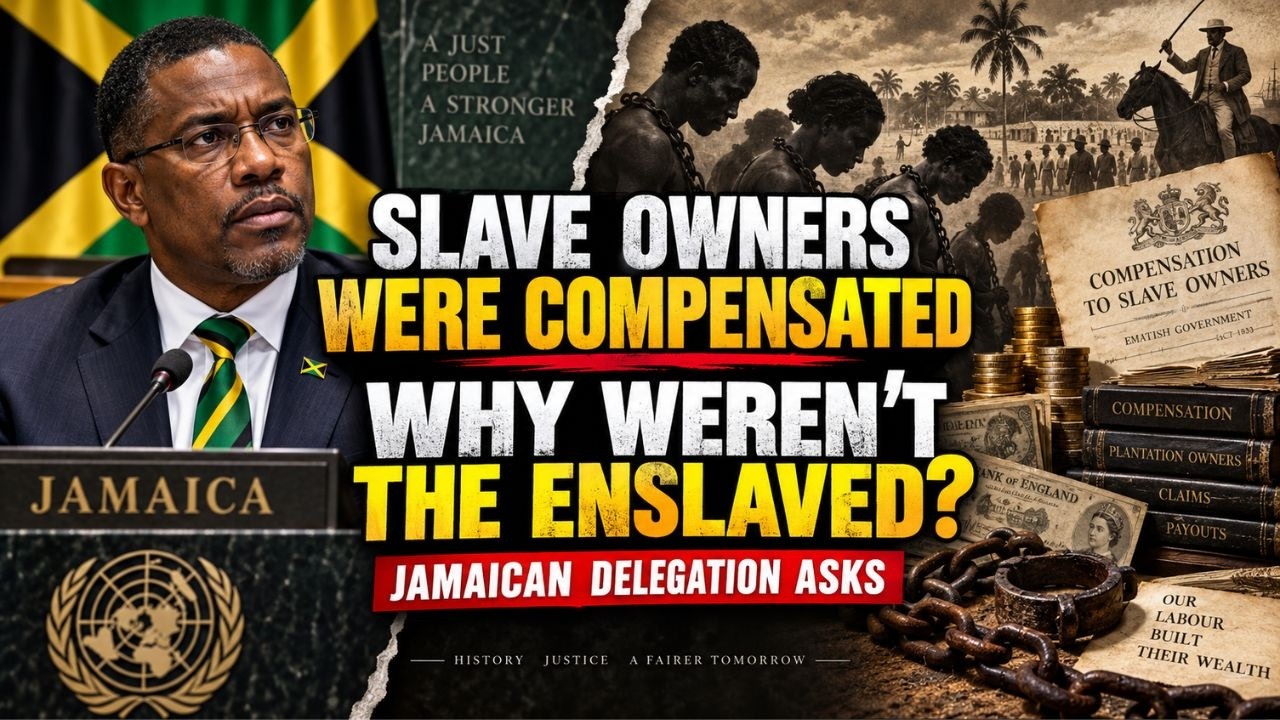
When slavery was abolished in parts of the Atlantic world, compensation was sometimes paid to slave owners for the loss of their legally recognized “property” — while the people who had actually been enslaved received nothing.
That raises an obvious historical and moral question: if governments found the money to compensate slave owners, why wasn’t compensation extended to the people who endured slavery itself?
In this video, we examine that contradiction and connect it to the broader reparations debate. We’ll look at how emancipation was structured, who governments chose to compensate, how wealth created through slavery continued to shape societies long after abolition, and why the question of reparations remains unresolved generations later.
This conversation isn’t only about the past. It’s about how societies account for historical injustice, who benefits from systems of exploitation, and what responsibility looks like after those systems officially end.
And if you want to experience Africa beyond the headlines, check out our travel brand Danfo. We curate intentional travel experiences centered around culture, history, food, community, and connection across the African continent.
🌍 Visit Danfo.Africa to learn more about upcoming experiences.
#Reparations #Slavery #BlackHistory #AfricanDiaspora #History
🎙️ New to streaming or looking to level up? Check out StreamYard and get $10 discount! 😍 https://streamyard.com/pal/d/5730196481114112