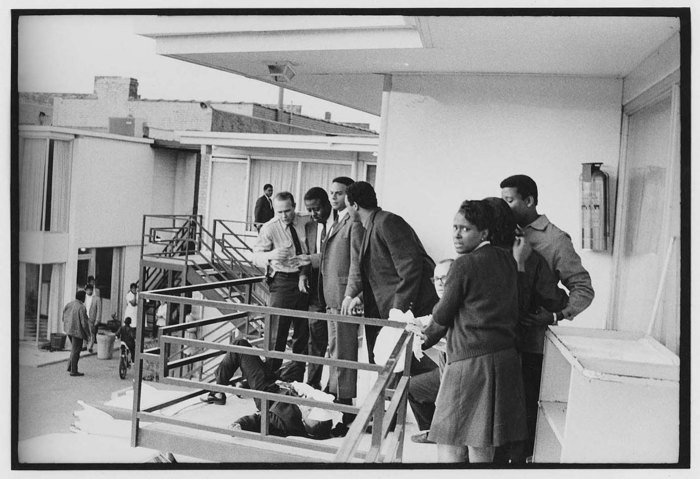
Shadows Over the Legacy: Ralph Abernathy’s Damning Accusations Against Jesse Jackson in the Wake of MLK’s AssassinationIn the turbulent aftermath of Dr. Martin Luther King Jr.’s tragic assassination on April 4, 1968, the civil rights movement was plunged into grief, chaos, and infighting. As the dust settled, one of King’s closest allies, Rev. Ralph David Abernathy, emerged not just as the successor to the Southern Christian Leadership Conference (SCLC), but as a vocal critic of those he saw exploiting the martyr’s death for personal gain. Chief among his targets was Jesse Jackson, a young and ambitious aide whose actions, according to Abernathy, reeked of opportunism and outright deception. Abernathy’s revelations, laid bare in his 1989 autobiography And the Walls Came Tumbling Down, painted Jackson as a self-serving figure who fabricated his role in King’s final moments to catapult himself into the spotlight—claims that have lingered like a stain on Jackson’s storied career.
en.wikipedia.org +1
Abernathy, who had been King’s inseparable companion through marches, arrests, and victories, was on the balcony of the Lorraine Motel in Memphis when the fatal shot rang out. In his book, he described rushing to King’s side, cradling his dying friend in his arms, and desperately trying to comfort him as life ebbed away. “I bolted out the door and found him there, face up, sprawled and unmoving,” Abernathy recounted. “Stepping over his frame I knelt down, gathered him in my arms, and began patting him on his left cheek.”
manhattan.institute
Jackson, however, was nowhere near this intimate scene—at least not according to Abernathy. The reverend placed Jackson down in the motel courtyard, chatting casually with others in King’s entourage when the gunfire erupted. This starkly contradicted Jackson’s dramatic public narrative, where he positioned himself as the heroic figure who held the bleeding King, absorbing his final words and blood-soaked legacy.The discrepancies didn’t stop at location. Abernathy accused Jackson of “brazen lies” to the media, inflating his proximity to King to seize the mantle of leadership.
commentary.org
Most infamously, Jackson appeared on national television the day after the assassination wearing a shirt smeared with what he claimed was King’s blood from cradling him—a poignant symbol that captivated the nation and elevated Jackson’s profile overnight. Abernathy, however, alleged this was a calculated stunt: Jackson had deliberately dipped his shirt in King’s pooled blood the following morning, not during the chaos of the shooting. “Jesse wanted to be Martin,” Abernathy later reflected, implying a raw ambition that prioritized self-promotion over mourning or movement unity.
nytimes.com
These accusations weren’t mere whispers; they were Abernathy’s public indictment of a man he saw as hijacking King’s death for personal glory, fracturing the fragile coalition King had built.The fallout was swift and vicious. Jackson, by then a prominent figure himself, denounced Abernathy’s book as “slander” and suggested that recent brain surgery had warped the elder reverend’s memory.
en.wikipedia.org +1
Joined by allies like Andrew Young and over two dozen civil rights leaders, Jackson held a press conference at King’s graveside to condemn the revelations, framing them as a betrayal that gave ammunition to the movement’s enemies.
upi.com
Yet Abernathy stood firm, even admitting in earlier interviews that Jackson “did tell some untruths about that day,” though he downplayed it at the time as youthful exaggeration.
mcall.com
Critics argued Abernathy’s motives were tainted by his own marginalization—after succeeding King as SCLC president, he was ousted amid internal strife, including clashes with Jackson’s rising influence.
upi.com
This episode exposes the ugly underbelly of heroism in the civil rights era: ambition clashing with authenticity, where even the noblest causes could be undermined by ego. Abernathy’s words cast Jackson not as a seamless heir to King’s dream, but as a manipulator who turned tragedy into a stepping stone, leaving a legacy marred by questions of integrity. Decades later, as we reflect on these fractures, it’s a reminder that the movement’s icons were all too human—and some, perhaps, more flawed than others in their pursuit of power.