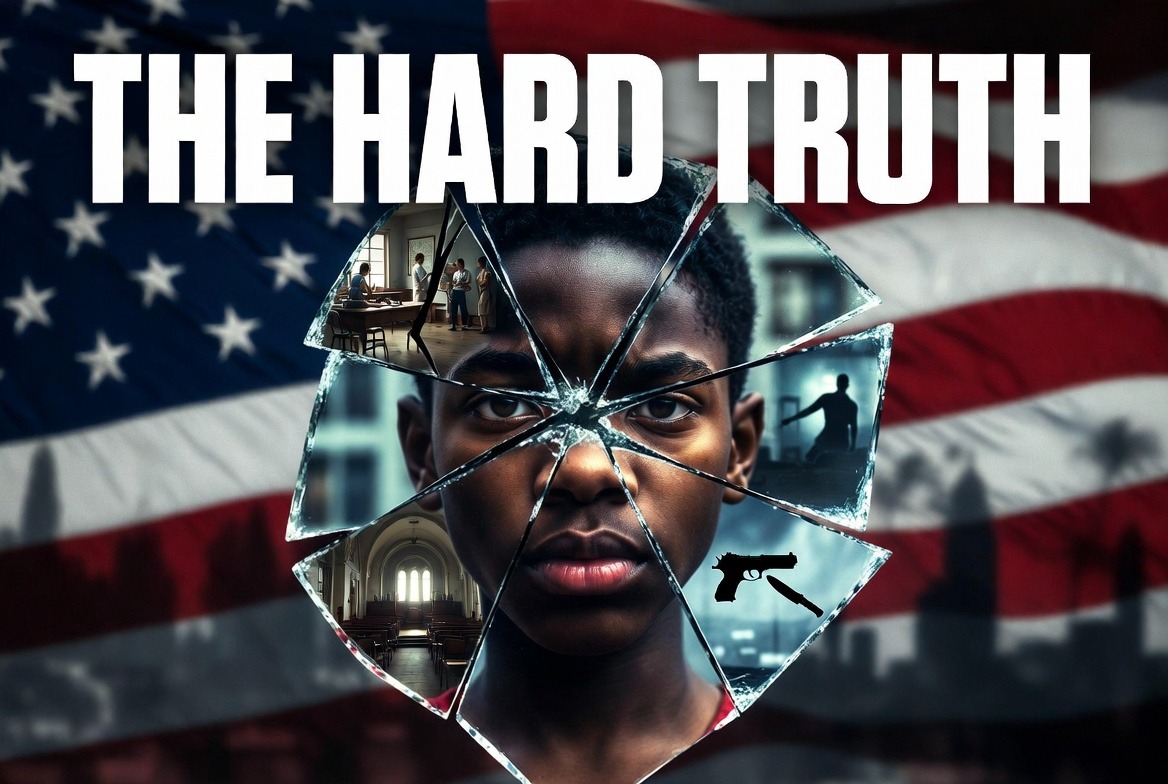
The recent cases of 14-year-old Cyrus Carmack-Belton, shot dead after a confrontation at a South Carolina gas station, and 19-year-old Karmelo Anthony, convicted of murder and sentenced to 35 years for fatally stabbing 17-year-old Austin Metcalf at a Texas track meet, have sparked outrage, protests, and racial framing. Media and activists quickly cast them as symbols of systemic injustice. But a clearer-eyed view reveals deeper failures within Black America: family breakdown, a pervasive victimhood ideology, the shortcomings of Black academia and culture, and the Black church’s drift from moral accountability. Until these realities are confronted, tragedies like these will multiply—not because of outsiders, but from within.
Cyrus Carmack-Belton: A 14-Year-Old with a Gun
In 2023, Cyrus Carmack-Belton was chased and shot by store owner Rick Chow (and his son) after an accusation of shoplifting water bottles. Surveillance and testimony indicated Cyrus was armed with a semiautomatic pistol, which he allegedly pointed during the pursuit before being shot in the back. Chow was acquitted on self-defense grounds. Prosecutors argued overreach; the jury saw a threat.
A 14-year-old roaming with a loaded gun is not a random misfortune. It reflects catastrophic parenting failures. Where were the adults teaching impulse control, consequences, and de-escalation? Why was a child in a position to be suspected of theft and armed for “protection”? Single-parent households, often glorified or excused, correlate strongly with higher youth involvement in crime and risky behavior across demographics—but outcomes hit Black communities hardest due to elevated rates. Absent or disengaged fathers leave boys seeking status through toughness or weapons rather than achievement.
Victimhood ideology compounds this. Narratives that frame every negative encounter as racial persecution discourage personal responsibility. Cyrus’s case became another “unjust killing” rallying cry, downplaying the gun and circumstances. This mindset teaches kids the world is against them, so rules don’t apply—until reality (a jury, a defender with a gun) intervenes fatally.
Karmelo Anthony: Knife in the Backpack, Victim Narrative in Court
Karmelo Anthony, a student with a decent GPA and jobs, brought a knife to a track meet, entered a rival team’s tent uninvited, escalated words (“Touch me and see what happens”), and stabbed Austin Metcalf in the chest after a push during a rain delay. He was convicted of murder, not manslaughter, and sentenced to 35 years. Self-defense claims failed; evidence showed provocation and lethal escalation.
Anthony came from a two-parent home that moved suburbs for better opportunities—yet the outcome suggests cultural baggage traveled with him. Bad parenting isn’t always absence; it includes failing to instill emotional regulation, conflict resolution without weapons, or the maturity that “captain of the team” status demands. Bringing a knife to a school event signals a mindset where violence is a ready option.The post-verdict response—claims of bias, all-white jury emphasis (despite facts of the stabbing), and protests—exemplifies victimhood ideology. Anthony had no prior record, but one impulsive, armed choice ended a life and his own future. Black academia and “role models” often prioritize systemic excuses over rigorous character formation. High-achieving exceptions exist, but average outcomes in many urban schools emphasize grievance over grit, leaving capable kids unprepared for real-world accountability.
The Role of Black Culture and the Church
Broader Black culture celebrates elements that undermine discipline: glorification of street credibility, quick resort to violence in disputes (“snitches get stitches,” hyper-masculine posturing), and media/entertainment that normalizes it. Moving to better zip codes doesn’t erase imported attitudes toward authority, confrontation, or rules. Data on crime disparities, fatherlessness (around 70%+ nonmarital birth rates in some stats), and disciplinary gaps aren’t illusions or racism—they’re measurable patterns demanding cultural introspection, not denial.
The Black church, historically a pillar of resilience, moral instruction, and community order, has too often pivoted to social justice activism and prosperity messaging at the expense of hard teachings on personal sin, family structure, delayed gratification, and forgiveness over retribution. Strong congregations emphasizing fatherhood, sexual responsibility, and bourgeois values (as Thomas Sowell has chronicled in cultural shifts) produced better outcomes historically. Today’s drift leaves a vacuum filled by secular victimology and nihilism.
Things Will Get Worse Without Confrontation
These cases aren’t isolated. They illustrate a cycle: weak family oversight produces kids carrying weapons and poor impulse control; victimhood ideology reframes accountability as oppression, discouraging reform; academic and cultural institutions reinforce excuses instead of excellence; the church fails to counter with transcendent values. External factors like store policies or policing exist, but they don’t explain why a 14-year-old has a gun or a teen brings a knife to track practice.
Black America can reverse this. It requires honest leaders rejecting race-baiting for data-driven discussions on family, culture, and behavior. Prioritize two-parent homes, school choice over failing monopolies, trade skills and entrepreneurship over grievance degrees, and churches refocusing on character. Reject narratives that pathologize success or normalcy as “acting White.”Cyrus lost his life young. Karmelo faces decades incarcerated. Austin Metcalf is gone. Their stories demand more than marches or op-eds blaming “society.” Real progress starts with internal accountability. Until then, expect more funerals, more convictions, and more excuses—while families on all sides grieve preventable losses. The mirror, not the system, holds the first answers.
Sources: CNN, AOL, ABC News and more…