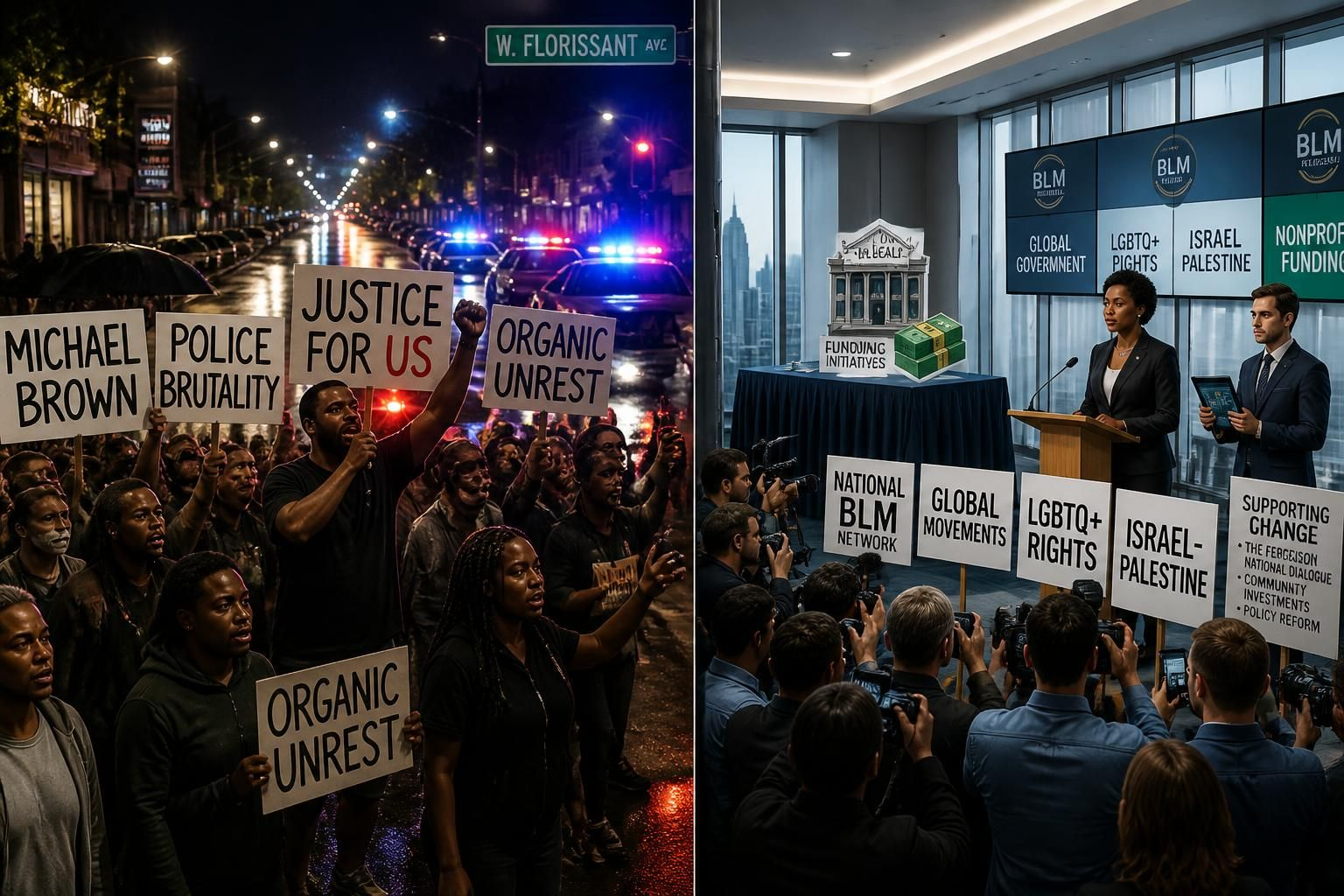
The Ferguson movement and the national Black Lives Matter (BLM) organization differed significantly in their origins, focus, and leadership structure, according to the sources. While the Ferguson movement began as an organic, community-led response to local injustice, the national BLM is described as a calculated, external entity that co-opted that energy for a different agenda.
The key differences identified in the sources include:
- Authenticity and Timing: The Ferguson movement started organically on social media the very day Michael Brown was killed, driven by local residents who were “sick and tired”. In contrast, the sources state that national BLM figures and organizations only appeared weeks later “when the cameras came”.
- Core Focus: The original movement in Ferguson was specifically focused on police brutality and the killing of Michael Brown. National BLM is described as having shifted this narrative to include various other issues, such as LGBT rights and the Israel-Palestine conflict, which the guest argues were not the initial concerns of the Ferguson protesters.
- Leadership vs. Community: Ferguson initially had no formal leaders; it was a spontaneous gathering of emotional and upset citizens. National BLM is characterized as being part of a “nonprofit industrial complex” led by individuals who were already integrated into professional activist circles and sought to propel themselves to the forefront of the movement for notoriety and fame.
- Unity vs. Division: The sources claim the original Ferguson protests saw a unique unity between different races, classes, and backgrounds. However, once national BLM arrived, they allegedly introduced divisions, such as separating the youth from elders and marginalizing the voices of straight black men in favor of a specific narrative.
- Funding and Resources: While national BLM received millions of dollars in donations from white liberal groups and major foundations like George Soros’s Open Society, none of those funds reached the Ferguson community. Local activists in Ferguson often faced extreme financial hardship, losing homes and jobs, while national figures were seen making branding deals and associating with the “elite 1%”.
- Political Affiliation: The Ferguson movement was a struggle against a local establishment that happened to be entirely Democratic, from the Governor to the prosecutor. The sources suggest that national BLM remained “attached at the hip” to the Democratic National Convention, which local activists viewed as a hindrance to achieving actual justice.
Ultimately, the source argues that the national BLM organization monetized the pain of the Ferguson community and “sold them down the river” by silencing local voices and diverting resources away from the people who actually started the uprising.