
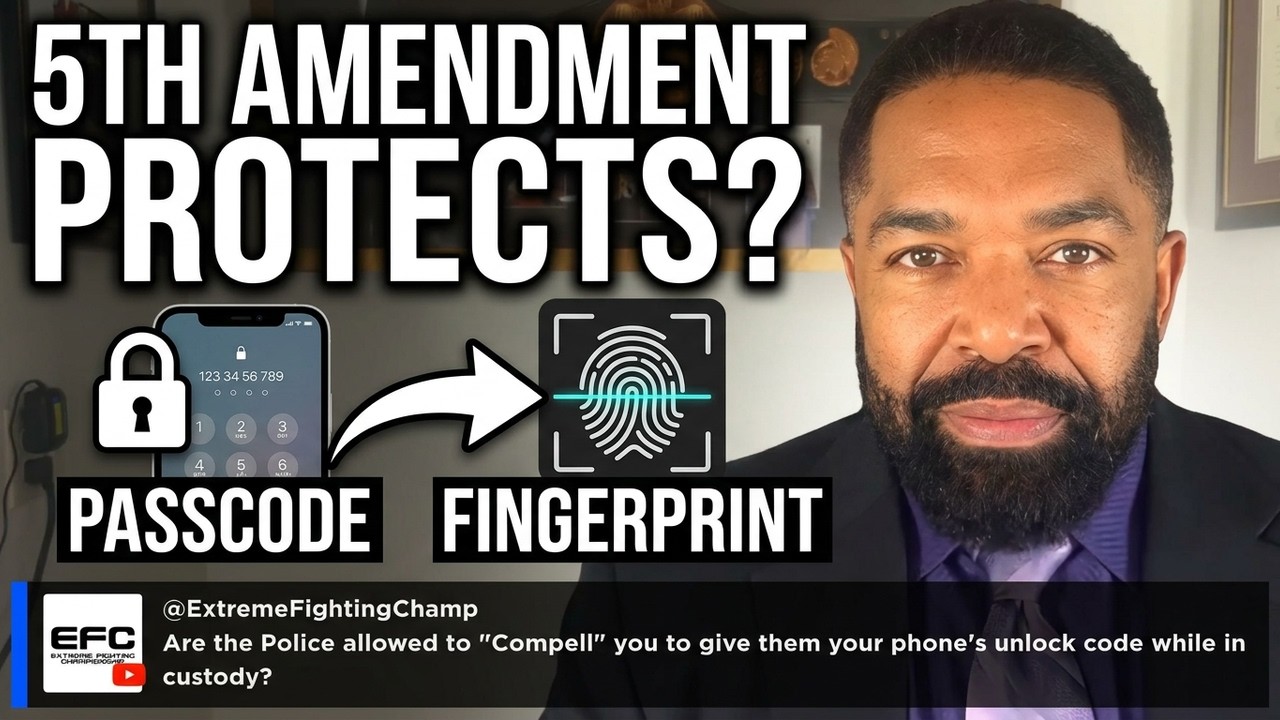
In this video, I break down the legal reality of what happens if you’re detained and police want access to your phone. We discuss the crucial differences between passcodes and biometrics (like Face ID or fingerprints) under the Fifth Amendment, and why the law views them very differently.
We also dive into the Supreme Court case Riley v. California, which established that police generally need a warrant to search the digital contents of a seized phone. It’s a fascinating, complex area of law that highlights just how quickly technology is outpacing our legal system.
Check out the full discussion to understand your rights and how to protect your private data.
Can police force you to provide your phone passcode? Learn how 5th amendment rights and 4th amendment protections apply when you are in custody.
This breakdown explains the legal distinction between a passcode and biometric security features like facial recognition or fingerprint locks. If you have ever questioned how police phone search policies operate in practice, this analysis clarifies the current judicial stance on what you must provide versus what you can legally withhold.
We examine how courts treat compelled phone access differently based on whether the data requires your knowledge or simply your physical characteristics. Understanding these nuances helps clarify your rights regarding search and seizure laws when interacting with law enforcement.
Subscribe for weekly legal system breakdowns, and comment below if you have questions about digital privacy rights.
0:00 Introduction: Can police force you to unlock your phone?
0:25 The legal reality: Warrants and digital searches
1:03 Passcodes vs. Biometrics: Key legal distinctions
2:18 Detention and your Fourth Amendment rights
3:07 Why phones are treated differently than wallets
4:12 The importance of scope: Why you can refuse consent
5:07 Riley v. California and jurisdiction differences
6:21 The Fifth Amendment: Testimonial evidence explained
7:33 Rant: Judicial technology literacy and the aging legal system
