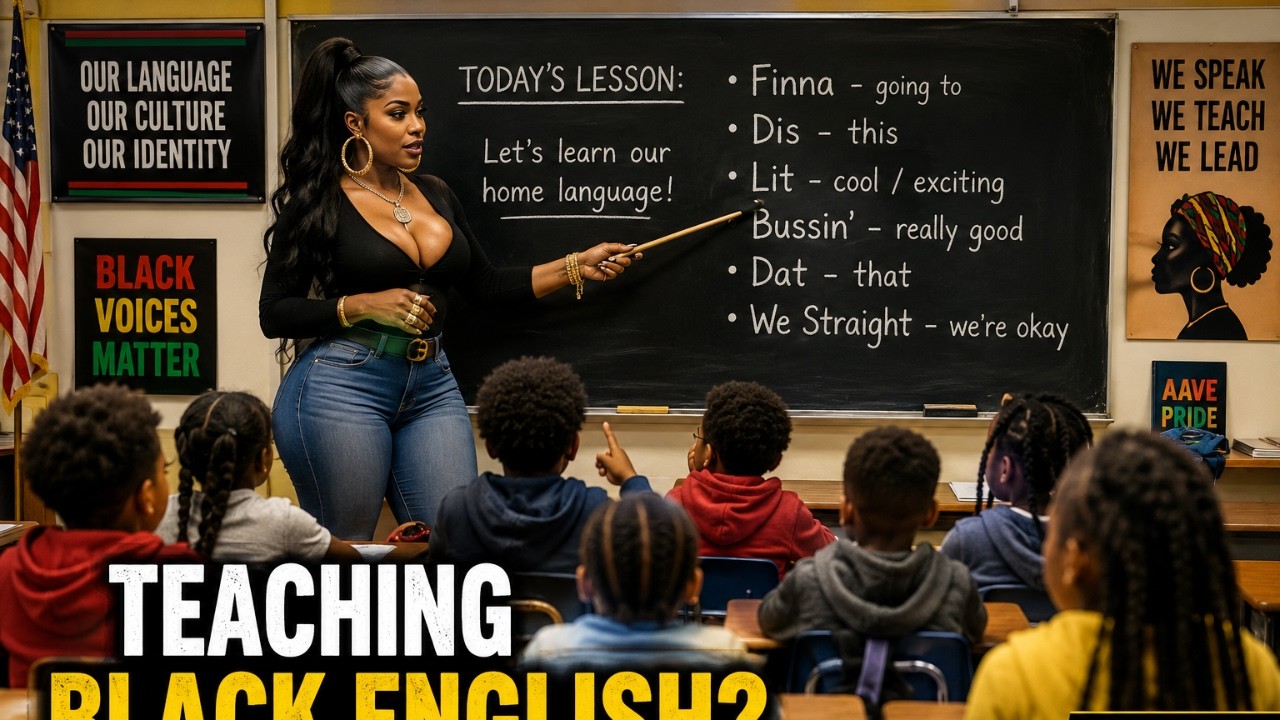
California is considering expanding the role of African American Vernacular English (AAVE), often called Black English, within educational frameworks. Supporters argue that recognizing students’ home dialect can improve engagement, cultural identity, and educational equity.
But does this approach actually prepare children for success?
On today’s David Seaton Show, I argue that elevating non-standard English in the classroom sends the wrong message. Every child deserves to master Standard English because it remains the language of higher education, business, law, government, and most professional workplaces.
The issue isn’t whether AAVE exists—it clearly does. The question is whether schools should treat it as an educational endpoint or a bridge to mastery of Standard English.
We’ll discuss:
Why expectations matter more than excuses.
Whether this policy helps or harms Black students.
The importance of code-switching and communication skills.
Why lowering standards has historically hurt minority communities.
The “soft bigotry of low expectations” and whether this debate reflects it.
If we truly believe Black children can compete with anyone in America, then we should equip them with every tool they’ll need—not fewer.
Join the conversation in the comments.
Do you believe schools should prioritize mastery of Standard English while acknowledging students’ home dialects, or should AAVE receive greater formal recognition in instruction?
🎙️ New to streaming or looking to level up? Check out StreamYard and get $10 discount! 😍 https://streamyard.com/pal/d/4609400416108544